12
days
12
11
7
25+

1
1
This is the tour that has it all. Go India Trip's 12-Day Rajasthan & Taj Mahal Tour combines the iconic Mughal wonders of Delhi and Agra with the full royal splendour of Rajasthan — weaving together India's most extraordinary cities, monuments, deserts, and lakes into one sweeping, unforgettable journey.
Stand before the Taj Mahal at sunrise as the white marble glows in golden light. Ride a camel into the legendary Sam Sand Dunes as the sun melts into the Thar Desert. Explore the cobalt-blue lanes of Jodhpur beneath the shadow of the mighty Mehrangarh Fort. Drift on a boat across Lake Pichola in romantic Udaipur as the City Palace reflects in the still water. From Delhi's bustling history to Udaipur's ethereal beauty — every single day of this tour delivers a memory that will last a lifetime.
Welcome to the vibrant capital city of India – Delhi! Upon arrival at the airport, our representative will greet you and assist with hotel transfer. Overnight stay in Delhi.
After breakfast, drive towards Mandawa, a beautiful town known as the Open Art Gallery of Rajasthan.
Mandawa Haveli : Explore the stunning frescoes and wall paintings depicting royal life.
Mandawa is a town in the Jhunjhunu district of Rajasthan, India, famous for its painted havelis (mansions) and fort, earning it the nickname "open-air art gallery". It is known for its rich cultural heritage, intricate frescoes, and traditional handicrafts, attracting tourists interested in history and art.
Village Walk & Bazaar View : Experience the rustic charm of rural Rajasthan with a guided walk through the colorful local bazaar.Overnight stay at hotel in Mandawa.
After breakfast, proceed to Bikaner, a desert city famous for its heritage and forts. tep into a city carved in red sandstone, where camel caravans meet grand palaces and every sunset paints the dunes gold.Short Intro for Homepage
Think Rajasthan is only Jaipur and Udaipur? Meet Bikaner — the underrated royal escape. 500-year-old forts, streets that smell of fresh bhujia, and the world’s most unusual temple. No crowds, just raw desert magic.
Junagarh Fort : Built in 1589, this magnificent fort houses palaces, temples, and courtyards.
Junagarh Fort is a fort in the city of Bikaner, Rajasthan, India. The fort was originally called Chintamani and was renamed Junagarh or "Old Fort" in the early 20th century when the ruling family moved to Lalgarh Palace outside the fort limits.old city walk Stroll through the narrow lanes filled with havelis and local sweets like Bikaneri Bhujia.
Jain Temple : Visit the ancient temple known for its marble work and spiritual ambiance.
This temple was constructed by Bhandasa Oswal in the 12th century. The temple is dedicated to Sumatinatha, the 5th tirthankara. According to legends, 40,000 kg of ghee instead of water was used in preparing the mortar for the construction of this temple. Overnight stay at hotel in Bikaner.
After breakfast, drive towards the Golden City — Jaisalmer. On arrival, begin exploring:
Pokaran Fort : on the way visit this historic 14th-century fort known for its architecture.
Pokhran Fort, also known as Balagarh, was built in the 14th century by the Rathore clan and is situated in the Thar Desert near Jaisalmer. This heritage site showcases Rajput architecture with palaces, courtyards, and a museum, and it has gained modern historical significance as the site of India's first underground nuclear weapon detonation in 1974 and subsequent tests in 1998.
Jaisalmer : the Golden City of Rajasthan, offers a unique desert experience with its majestic fort, beautifully carved havelis, and unforgettable camel safaris across the Thar Desert. It is a perfect destination for travelers seeking history, culture, and desert adventure. Jaisalmer was founded in 1156 AD by Rawal Jaisal, a Rajput ruler of the Bhati clan. He established the city in the heart of the Thar Desert and built the magnificent Jaisalmer Fort, which became the center of power and life in the region. Due to its strategic location on ancient trade routes connecting India with Central Asia, Jaisalmer flourished as an important trading hub. Merchants grew wealthy, leading to the construction of beautifully carved havelis that still stand as symbols of prosperity.
Bada Bagh : A peaceful garden complex of royal cenotaphs offering stunning sunset views.
Bada Bagh, also called Barabagh is a garden complex located about six kilometers north of Jaisalmer in the Indian state of Rajasthan. Overlooking a mango plantation sits a set of royal chhatri cenotaphs constructed by the kings of the Jaisalmer State in the 18th, 19th and early 20th centuries CE. Overnight stay at hotel in Jaisalmer.
Jaisalmer Fort : A UNESCO World Heritage Site, still home to locals within its golden walls.
Jaisalmer Fort is situated in the city of Jaisalmer, in the Indian state of Rajasthan. It is one of the very few "living forts" in the world, as nearly one fourth of the old city's population still resides within the fort. For the better part of its 860-year history, the fort was the city of Jaisalmer.
Patwon Ki Haveli : A cluster of five havelis famous for intricate carvings. Patwon ki Haveli is a complex of five interconnected mansions in Jaisalmer, Rajasthan, built between 1805 and 1860 by wealthy merchant Guman Chand Patwa for his sons. Constructed from yellow sandstone, the haveli showcases intricate carvings and is a significant example of traditional Rajasthani architecture with both Rajput and Mughal influences. After the Patwa family left, the havelis were sold and eventually became a cultural landmark, with one mansion now housing a museum.
Gadsisar Lake : Enjoy a serene walk and feed the fish by the lake.
Gadisar Lake is an artificial lake in Jaisalmer, Rajasthan, India. It was built by the founder of Jaisalmer, Rawal Jaisal Bhati in 1156 AD and later rebuilt by his successor Rawal Gadsi Bhati around 1367 AD. The lake is located about 1.5 km from Jaisalmer Fort.
Kuldhara Desert Village : Drive to the mysterious abandoned village.
Kuldhara is an abandoned village in the Jaisalmer district of Rajasthan, India, established in the 13th century by the Paliwal Brahmins. It is known as a "ghost village" because its inhabitants vanished overnight around 1825, leaving behind their homes and streets, and it is now an eerie, deserted site filled with legends and mystery. While local folklore attributes the abandonment to a curse or an unjust ruler, scientific investigations suggest the community may have migrated to other settlements.
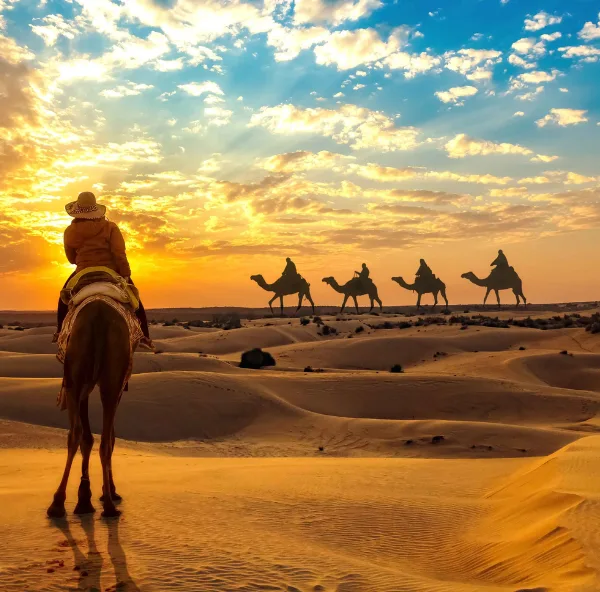
Camel Ride at Sam Sand Dunes : Experience a golden sunset over the Thar Desert. A camel ride at Sam Sand Dunes offers a classic desert experience, with options ranging from short sunset rides to full-day or overnight packages that include traditional activities and meals. A short sunset camel ride and treditional folk dance programme . [ optional ] back to Hotel in Jaisalmer.
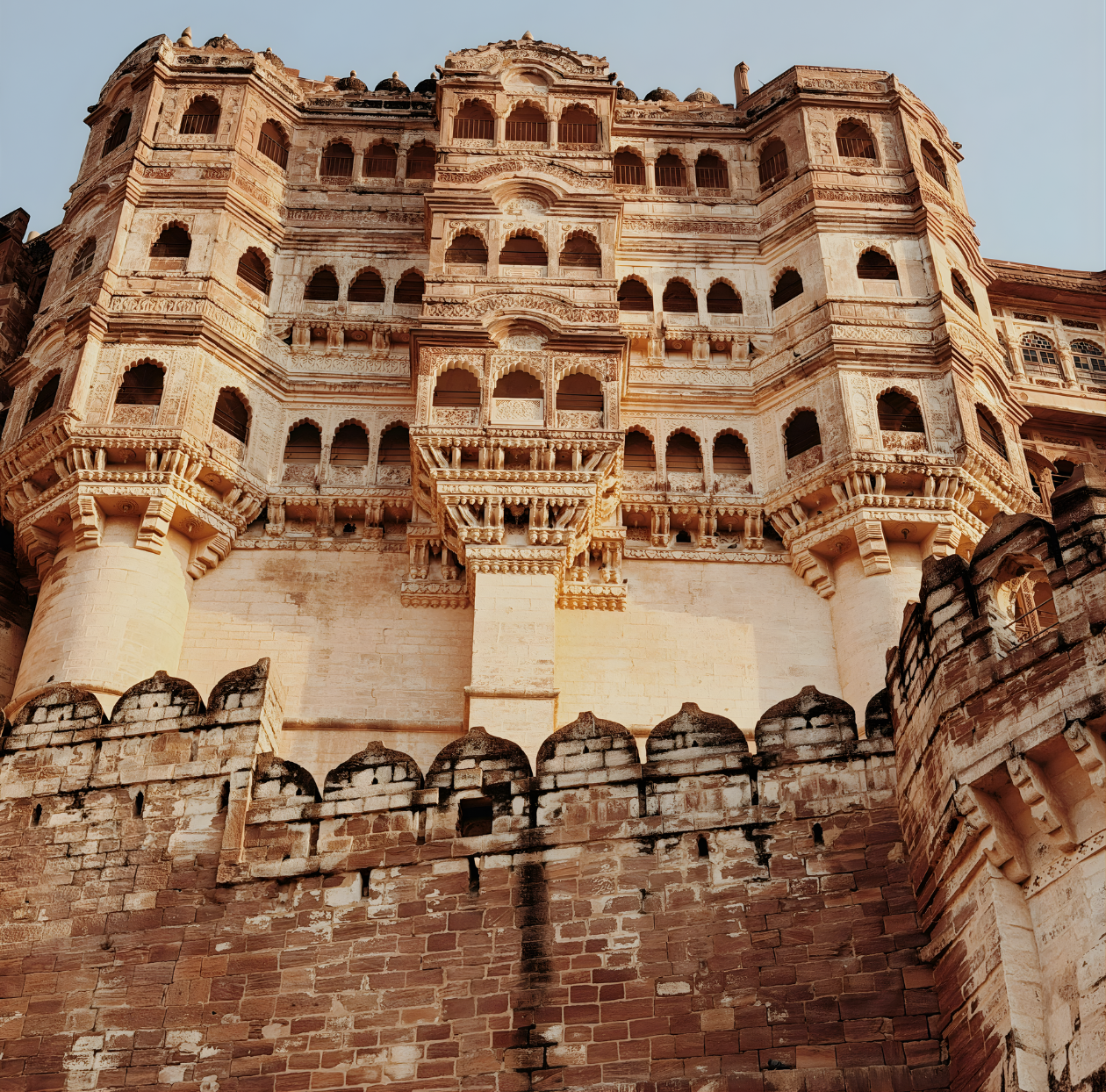
Jodhpur : The Blue City of Rajasthan. Jodhpur, known as the Blue City of Rajasthan, is famous for its striking blue-painted houses and rich royal heritage. Dominating the skyline is the grand Mehrangarh Fort, one of the largest and most impressive forts in India, offering breathtaking views of the city.
Mehrangarh Fort : One of India’s largest forts, with panoramic views of the blue-painted houses. Mehrangarh Fort is a massive 15th-century fortress in Jodhpur, Rajasthan, India, that is built on a hilltop and is home to a museum containing relics of Indian courtly life. Constructed by Rao Jodha, the fort is notable for its impressive architecture, rich history, and stunning views of the surrounding "Blue City"
Jaswant Thada : A marble cenotaph built in memory of Maharaja Jaswant Singh II.
Jaswant Thada is a white marble cenotaph (memorial) in Jodhpur, Rajasthan, built in 1899 by Maharaja Sardar Singh to honor his father, Maharaja Jaswant Singh II. Also known as the "Taj Mahal of Marwar," it is renowned for its intricate Rajputana-style architecture, which includes thin, polished marble slabs that give off a warm glow in the sunlight. The complex also features beautiful gardens, a small lake, and portraits of the rulers of Jodhpur.
Blue City Walk : Explore the old town’s vibrant blue alleys and bustling bazaars. Over night in jodhpur
Udaipur : The City of Lakes. On arrival, enjoy, Udaipur, known as the City of Lakes, is one of the most romantic destinations in India. Surrounded by the Aravalli Hills, the city is famous for its beautiful lakes like Lake Pichola and stunning palaces. Udaipur was founded in 1559 by Maharana Udai Singh II, the ruler of Mewar. He established the city after leaving Chittorgarh Fort. Surrounded by the Aravalli Hills, Udaipur was chosen as a safer and more strategic location for the new capital of Mewar. The rulers built magnificent palaces, temples, and artificial lakes, making the city a center of art, culture, and royal living.
Evening Folk Dance Show, Witness Rajasthani culture through traditional dance at Bagore Ki Haveli.
Lake Walk : Enjoy a peaceful stroll around Pichola Lake as the sun sets. Lake Pichola, in Udaipur city in the Indian state of Rajasthan, is an artificial fresh water lake, created in the year 1362, named after the nearby Picholi village. It is one of the several contiguous lakes, and developed over the last few centuries in and around Udaipur city. Overnight stay at hotel in Udaipur.
City Palace : A grand complex overlooking Lake Pichola with museums and courtyards. City Palace, Udaipur is a palace complex situated in the city of Udaipur in the Indian state of Rajasthan. It was built over a period of nearly 400 years, with contributions from several rulers of the Mewar dynasty. Boat Ride on Lake Pichola, Witness the beauty of Jag Mandir and Lake Palace.
Saheliyon Ki Bari : Visit the royal garden of fountains built for princesses. Saheliyon-ki-Bari is a major garden and a popular tourist space in Udaipur in the Indian state of Rajasthan. It lies in the northern part of the city and has fountains and kiosks, a lotus pool and marble elephants. It was built by Rana Sangram Singh.
Old City Walk : Explore narrow streets, handicraft shops, and vibrant art galleries. An old city heritage walk in Udaipur typically includes exploring landmarks around Lake Pichola like the City Palace, Jagdish Temple, and Bagore Ki Haveli, along with visiting historic step wells and local markets. These guided tours often provide cultural insights and are designed to connect thematic cultural sites for a deeper visitor experience. Overnight stay at hotel in Udaipur.
Explore the vibrant charm of Jaipur, famously known as the Pink City of India. In 1876, the city was painted pink to welcome Prince Albert, symbolizing hospitality. Since then, Jaipur has been famously known as the “Pink City.” This historic city beautifully blends royal heritage, colorful culture, and architectural brilliance. Jaipur was founded in 1727 by Maharaja Sawai Jai Singh II, the ruler of Amber. Due to growing population and water scarcity in Amber Fort, he decided to shift his capital and build a new planned city.
The City Palace : Jaipur is a royal residence and former administrative headquarters of the rulers of the Jaipur State in Jaipur, Rajasthan. Construction started soon after the establishment of the city of Jaipur under the reign of Maharaja Sawai Jai Singh II, who moved his court to Jaipur from Amber, in 1727.
Jantar Mantar : The ancient astronomical observatory.The Jantar Mantar is a collection of 19 astronomical instruments built by the Rajput king Sawai Jai Singh, the founder of Jaipur, Rajasthan. The monument was completed in 1734. It features the world's largest stone sundial, and is a UNESCO World Heritage Site. It is near City Palace and Hawa Mahal.
Pink City Walk : Discover colorful bazaars, local artisans, and traditional Rajasthani life. Overnight stay at hotel in Jaipur.
Hawa Mahal is one of the most iconic landmarks of Jaipur, known for its unique honeycomb-shaped structure and beautiful pink sandstone architecture. Built in 1799 by Maharaja Sawai Pratap Singh, it is a fine example of Rajput architecture.
Panna Meena ka Kund : is a historic stepwell located near Amber Fort in Jaipur, known for its symmetrical stairways and unique architectural design. Built in the 16th century, this stepwell was used as a water storage system and a community gathering place for the local people.
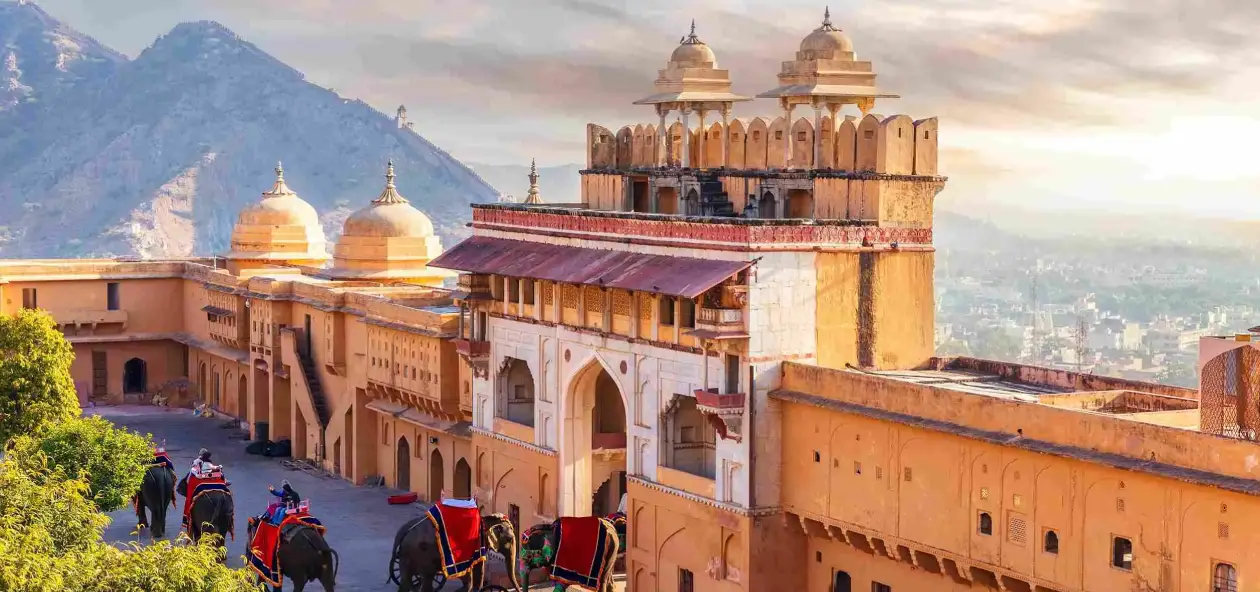
Amber Fort : Explore the majestic fort with royal palaces and mirror halls. Amber Fort is a historic fort in Jaipur, India, known for its blend of Hindu and Mughal architecture, built with red sandstone and white marble in the late 16th century. Located on a hilltop, it served as the capital for the Kachhwaha Rajputs and is now a UNESCO World Heritage site. Key features include its palace complex, intricate carvings, mirror work, and a secret tunnel connecting it to the nearby Jaigarh Fort.
Jal Mahal : Enjoy a photo stop at the scenic Water Palace. Later, drive towards Agra, the city of love. Jal Mahal is a palace in the middle of the Man Sagar Lake in Jaipur city, the capital of the state of Rajasthan, India. The palace was originally constructed around 1699; the building and the lake around it were later renovated and enlarged in the early 18th century by Maharaja Jai Singh II of Amber.
Gaitor Ki Chhatriyan : cenotaph is a peaceful and historically important site in Jaipur, known for its beautiful royal cenotaphs (chhatris). It served as the cremation ground of the Kachwaha Rajput rulers of Jaipur.The word “Gaitor” means “resting place of the departed,” and the site truly reflects a calm and serene atmosphere. Each cenotaph is built in memory of a king and showcases intricate carvings, domes, and delicate architecture. Afternoon free shopping time.overnight in jaipur
Fatehpur Sikri : a magnificent UNESCO World Heritage site built in 16th century by the Mughal emperor Akbar in the 16th century. Once the capital of the Mughal Empire, this grand city was later abandoned due to water scarcity. Fatehpur Sikri reflects the glory, vision, and architectural brilliance of the Mughal era, making it a fascinating historical destination.
Agra : Agra is a historic city on the banks of the Yamuna River, famous for its Mughal heritage and timeless beauty. The city is home to the world-renowned Taj Mahal, a symbol of eternal love and one of the Seven Wonders of the World. visit to the world-famous Taj Mahal
Agra fort : Agra Fort is a magnificent UNESCO World Heritage site located in Agra. Built by the Mughal emperor Akbar in the 16th century, this grand red sandstone fort served as the main residence of the Mughal rulers. Inside the fort, you can explore beautiful palaces, courtyards, and halls such as Diwan-i-Am and Diwan-i-Khas, showcasing stunning Mughal architecture. Later, Shah Jahan added elegant marble structures, including the Musamman Burj, where he was imprisoned and spent his last days overlooking the Taj Mahal. Agra Fort reflects the power, luxury, and architectural brilliance of the Mughal Empire and is a must-visit for history lovers.
Mehtab Bagh: strong>Mehtab Bagh is a beautiful Mughal garden located on the banks of the Yamuna River, directly opposite the Taj Mahal in Agra.Built during the Mughal era, this serene garden was designed as a perfect viewing point for the Taj Mahal. It is especially famous for its breathtaking sunset views, where the white marble monument reflects golden hues, creating a magical atmosphere.overnight in Agra.
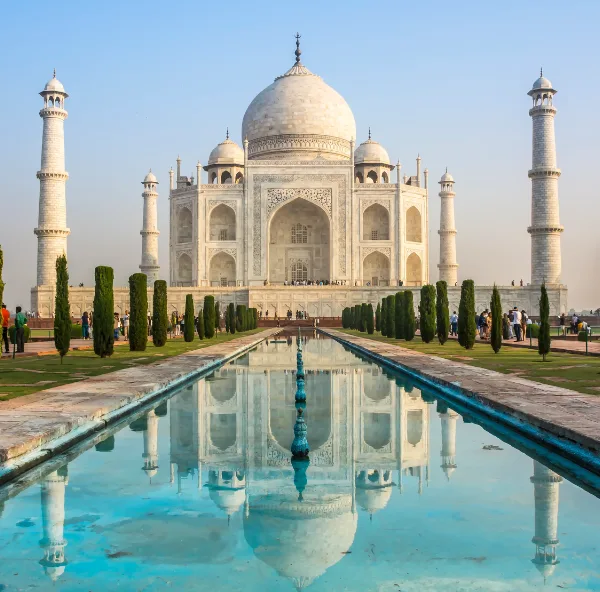
Taj mahal : early in the morning visit The taj mahal witness its marble beauty glowing in the first light of dawn. The Taj Mahal is an ivory-white marble mausoleum in Agra, India, built by Mughal emperor Shah Jahan as a tomb for his wife, Mumtaz Mahal. Considered a masterpiece of Mughal architecture and a symbol of India's rich history, the complex also includes a mosque, guest house, gardens, and a wall. Commissioned in 1632, the main mausoleum was completed in 1648, with the surrounding buildings and gardens finished by 1653. After visit back to hotel and take your breakfast and drive to Delhi.
After breakfast, you’ll be dropped off at Agra / Delhi Airport or Railway Station for your onward journey.
We take care of every detail you can travel with confidence ease.
Copyright © Go India Trip, All Rights Reserved.
Term & Condition , Privacy Policy