2



days
2
1
10+
3
1
Jaipur — India's first planned city and the jewel of Rajasthan — deserves more than a rushed half-day visit. With Go India Trip's 2-Day Jaipur Tour, you get the full Pink City experience: a leisurely first day discovering the grand forts, iconic palaces, and hidden gems of the city, followed by a second day diving deep into Jaipur's rich culture, vibrant bazaars, and its extraordinary living heritage.
From the hilltop majesty of Amber Fort and the delicate lattice façade of Hawa Mahal, to the royal interiors of City Palace, the astronomical genius of Jantar Mantar, and the bustling colour of Johri Bazaar — two full days in Jaipur give you the time to truly absorb the grandeur, the stories, and the spirit of this magnificent city. Jaipur is not just a destination — it is a living, breathing royal experience. Itinerary
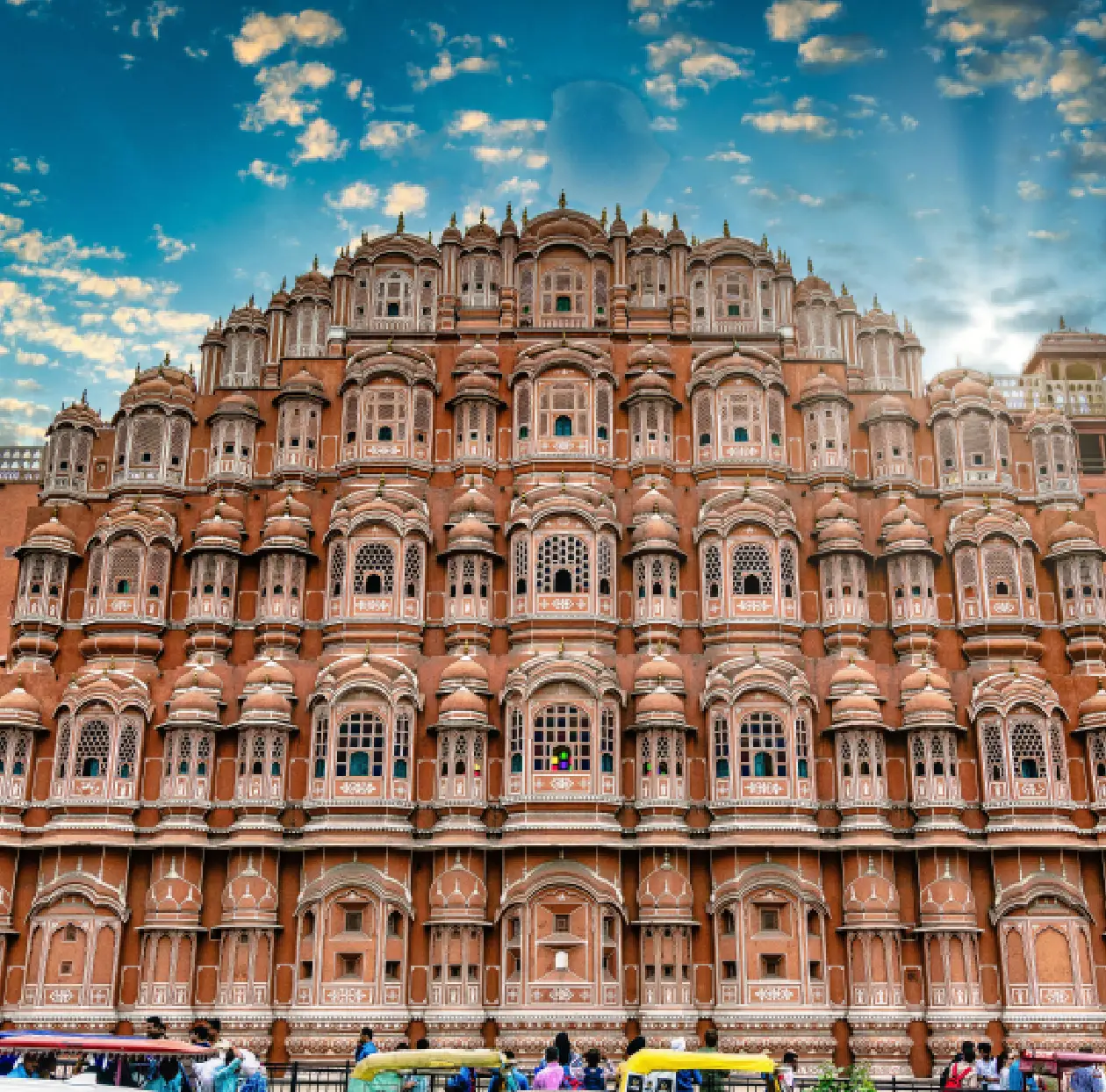
Hawa Mahal : is one of the most iconic landmarks of Jaipur, known for its unique honeycomb-shaped structure and beautiful pink sandstone architecture. Built in 1799 by Maharaja Sawai Pratap Singh, it is a fine example of Rajput architecture.
The structure has 953 small windows (called jharokhas), which allow cool air to circulate throughout the building, making it naturally ventilated even during hot summers. This is why it is called the “Palace of Winds.”
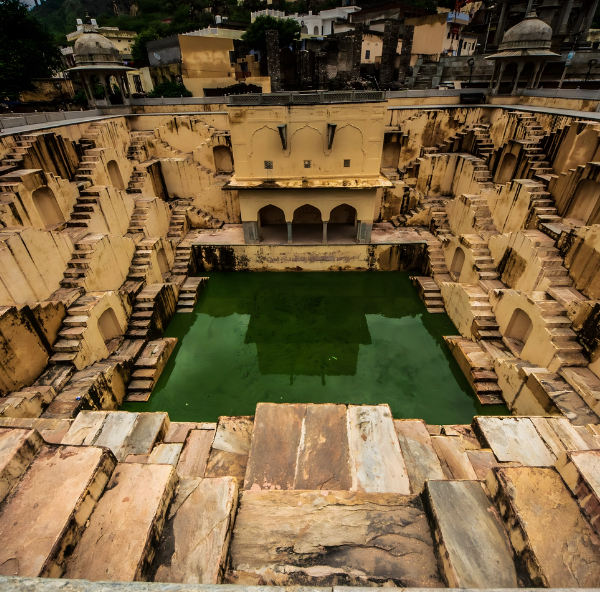
Panna Meena ka Kund : is a historic stepwell located near Amber Fort in Jaipur, known for its symmetrical stairways and unique architectural design. Built in the 16th century, this stepwell was used as a water storage system and a community gathering place for the local people.
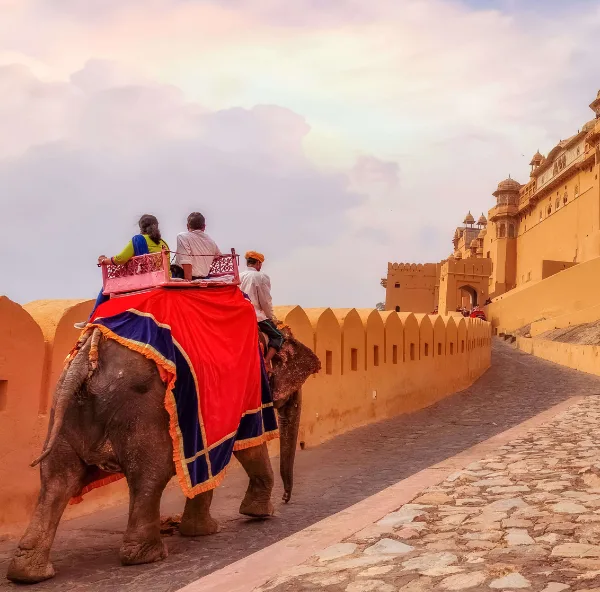
Amber Fort : also known as Amer Fort, is one of the most magnificent forts in Rajasthan, located on a hilltop near Jaipur. Built in the late 16th century by Raja Man Singh I, it served as the main residence of the Rajput rulers before Jaipur city was established. The fort is constructed using red sandstone and marble, showcasing a beautiful blend of Rajput and Mughal architectural styles. It is known for its grand courtyards, artistic gates, and intricate carvings that reflect the royal lifestyle of that era.One of the most famous attractions inside the fort is the Sheesh Mahal (Mirror Palace), where thousands of tiny mirrors are embedded in the walls and ceilings. When light falls on these mirrors, the entire room sparkles like stars.
Nahargarh Fort: Nahargarh Fort in Jaipur is a historic hilltop fortress built in 1734 by Maharaja Sawai Jai Singh II, offering panoramic views of the Pink City and serving as part of Jaipur’s defensive ring alongside Amber and Jaigarh Forts. Today, it is a popular tourist destination known for its royal palace, Madhavendra Bhawan, and its stunning sunset views.
Jaigarh Fort : Jaigarh also known as the “Victory Fort,” is one of Jaipur’s most formidable hilltop forts, built in 1726 by Maharaja Sawai Jai Singh II. Overlooking Amer Fort and Maota Lake from the Cheel ka Teela (Hill of Eagles), it is famous for housing the world’s largest wheeled cannon, Jaivana, and for its strong military architecture.
Jal Mahal : meaning “Water Palace,” is one of the most beautiful architectural wonders of Jaipur. It is located in the middle of Man Sagar Lake, surrounded by the Aravalli hills, creating a stunning and peaceful view.The palace was built in the 18th century by Maharaja Madho Singh I. It was mainly used as a royal leisure spot and a place for duck hunting by the kings. The architecture of Jal Mahal reflects a combination of Rajput styles.
Jantar Mantar : in Jaipur is one of the largest and best-preserved astronomical observatories in the world. It was built in the 18th century by Maharaja Sawai Jai Singh II, who had a deep interest in astronomy and science.
The observatory consists of 19 large instruments, each designed for specific astronomical calculations such as measuring time, predicting eclipses, tracking stars, and determining the positions of celestial bodies.
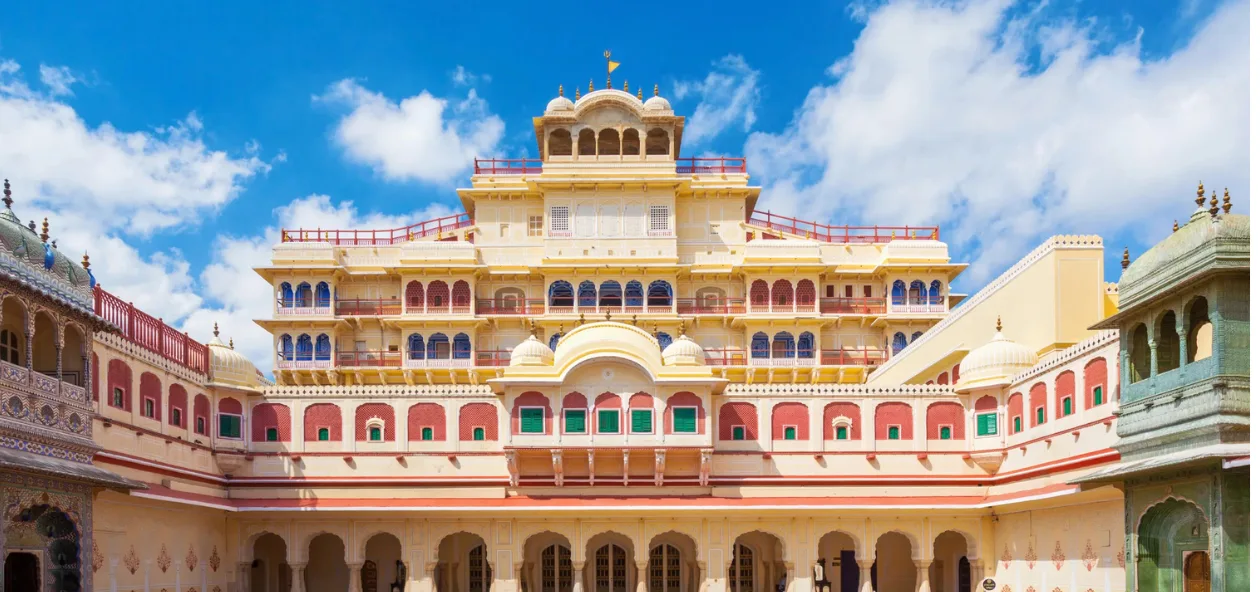
City Palace : is one of the most famous landmarks in Jaipur, located in the heart of the city. It was built by Maharaja Sawai Jai Singh II in the 18th century when he founded Jaipur. The palace served as the royal residence of the Kachwaha Rajput rulers and still houses the royal family today.The palace complex is a beautiful blend of Rajput, Mughal, and European architectural
styles. It consists of several courtyards, gardens, and buildings that showcase the grandeur and lifestyle of the royal era.
Gaitor Ki Chhatriyan : is a peaceful and historically important site in Jaipur, known for its beautiful royal cenotaphs (chhatris). It served as the cremation ground of the Kachwaha Rajput rulers of Jaipur.The word “Gaitor” means “resting place of the departed,” and the site truly reflects a calm and serene atmosphere. Each cenotaph is built in memory of a king and showcases intricate carvings, domes, and delicate architecture is a peaceful and historically important site in Jaipur, known for its beautiful royal cenotaphs (chhatris). It served as the cremation ground of the Kachwaha Rajput rulers of Jaipur.The word “Gaitor” means “resting place of the departed,” and the site truly reflects a calm and serene atmosphere. Each cenotaph is built in memory of a king and showcases intricate carvings, domes, and delicate architecture
Jaipur City Walk : is one of the best ways to explore the rich culture, history, and vibrant life of the Pink City. Walking through the narrow streets and busy bazaars gives a closer look at Jaipur’s traditions, architecture, and daily lifestyle.
We take care of every detail you can travel with confidence ease.
Copyright © Go India Trip, All Rights Reserved.
Term & Condition , Privacy Policy