7



06 - Night
7
6
4
15+

1
1
Explore India’s iconic cultural route — Delhi, Agra, and Jaipur — along with the spiritual heart of the country, Varanasi. This 7-day journey takes you from the historic monuments of the Mughal era to the royal palaces of Rajasthan and finally to the sacred ghats of the River Ganges, offering a perfect blend of history, architecture, and spirituality.
A 7-day Golden Triangle Tour covering Delhi, Agra, Jaipur, and Varanasi. Visit UNESCO monuments, the Taj Mahal, Jaipur’s forts, and witness the Ganga Arti on the banks of the holy river.
Welcome by our driver on the airport and transfer to hotel.
Overnight : Delhi.
Delhi : India’s capital territory, is a massive metropolitan area in the country’s north. In Old Delhi, a neighborhood dating to the 1600s, stands the imposing Mughal-era Red Fort, a symbol of India, and the sprawling Jama Masjid mosque, whose courtyard accommodates 25,000 people. Nearby is Chandni Chowk, a vibrant bazaar filled with food carts, sweets shops and spice stalls.
Old Delhi : showcases Mughal brilliance with the Jama Masjid, Raj Ghat, and the bustling streets of Chandni Chowk.
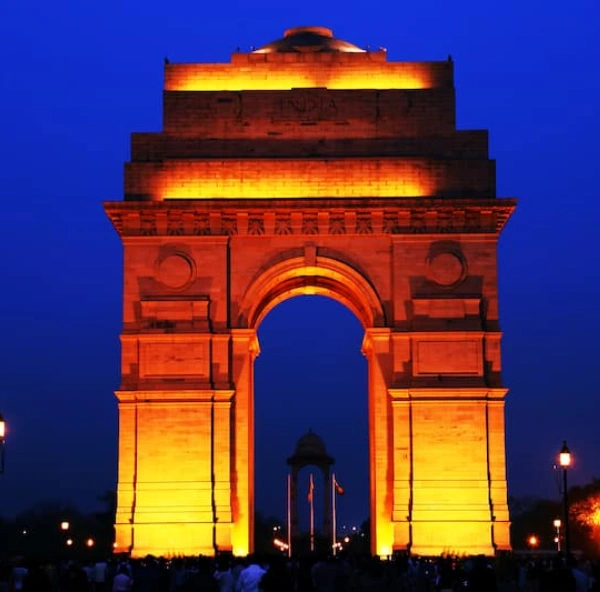
New Delhi : features elegant British-era architecture — India Gate, Rashtrapati Bhavan.
Humayun’s Tomb : Humayun's Tomb in Delhi is a UNESCO World Heritage Site and a magnificent garden mausoleum built for the Mughal Emperor Humayun, commissioned by his senior widow, Bega Begam. Completed in 1572, it is a prime example of Mughal architecture, inspired by Persian styles, and features a prominent Charbagh garden, with water channels and pavilions. It's considered the first substantial example of Mughal architecture in India and inspired the Taj Mahal.
The Qutub : [ if you have time ]The Qutub Minar is a UNESCO World Heritage Site in Delhi, India, standing 72.5 meters tall and known as the tallest masonry tower in India. Construction began in 1199 by Qutb-ud-din Aibak, and the tower was completed by his successor, Iltutmish. It is a historical monument of Indo-Islamic architecture, famous for its intricate carvings, projected balconies, and the surrounding Qutub complex with other ancient structures. .
After breakfast, drive to Agra, the city of eternal love.
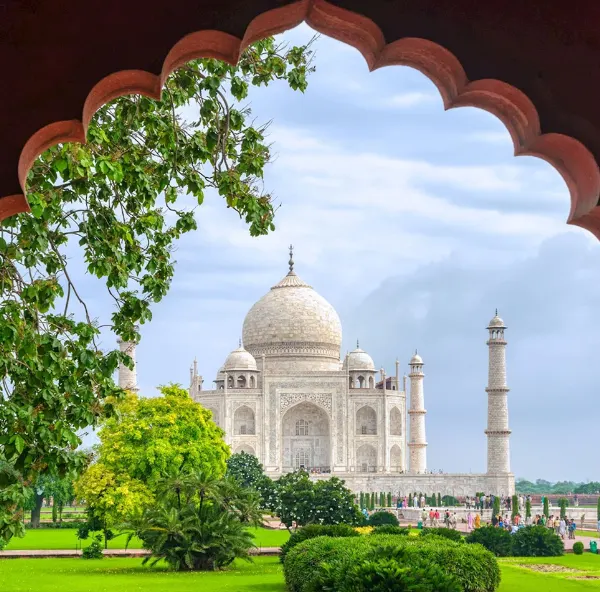
Agra City Overview : After breakfast, drive to Agra, the city of eternal love. Located on the banks of the Yamuna River, Agra is home to the world-famous Taj Mahal — a symbol of love and an architectural masterpiece of the Mughal era. The city is filled with artistic heritage, marble inlay work, and Mughal grandeur.
Agra Fort : The Agra Fort is a historical Mughal fort in the city of Agra, also known as Agra’s Red Fort. Mughal emperor Humayun was crowned at this fort in 1530. It was later renovated by the Mughal emperor Akbar from 1565 and the present-day structure was completed in 1573.
Mehtab Bagh : Mehtab Bagh is a Charbagh complex in Agra, North India. It lies north of the Taj Mahal complex and the Agra Fort on the opposite side of the Yamuna River, in the flood plains. The garden complex, square in shape, measures about 300 by 300 meters and is perfectly aligned with the Taj Mahal on the opposite bank.
Itmad-ud-Daulah(Baby Taj) : Tomb of I'timād-ud-Daulah is a Mughal mausoleum in the city of Agra in the Indian state of Uttar Pradesh. Often described as a "jewel box", sometimes called the "Bachcha Taj" or the "Baby Taj", the tomb of I'timād-ud-Daulah is often regarded as a draft of the Taj Mahal.
Overnight : Agra.
Start your day early to visit the Taj Mahal at sunrise — the most famous symbol of love in the world. The Taj Mahal is one of the most beautiful monuments in the world and is also one of the Seven Wonders of the World. Built by Shah Jahan in memory of his wife Mumtaz Mahal, it symbolizes eternal love. Made of white marble, it is famous for its stunning architecture and intricate carvings. It is also a UNESCO World Heritage Site and attracts millions of visitors every year.
Fatehpur Sikri (En Route Stop) : Built by Emperor Akbar in the 16th century, this UNESCO World Heritage Site served briefly as the Mughal capital. The grand Buland Darwaza, Panch Mahal, and Jodha Bai’s Palace display Indo-Islamic architecture at its finest.Continue your journey to Jaipur, known as the Pink City.
Jaipur City Overview : Founded in 1727 by Maharaja Sawai Jai Singh II, Jaipur is a perfect blend of royal heritage and vibrant culture. It’s known for its palaces, forts, colorful bazaars, and architectural harmony — symbolizing Rajasthan’s regal charm. Called also Pink City or Toulouse de Inde.
City Palace : The City Palace, Jaipur, is a royal residence and former administrative headquarters of the rulers of the Jaipur State in Jaipur, Rajasthan. Construction started soon after the establishment of the city of Jaipur under the reign of Maharaja Sawai Jai Singh II, who moved his court to Jaipur from Amber in 1727.
Jantar Mantar : Jaipur is one of the largest and best-preserved astronomical observatories in the world. It was built in the 18th century by Maharaja Sawai Jai Singh II, who had a deep interest in astronomy and science.
Pink city : walk possible in pink city in spice market, vegetable market,old merchant house with pink paint.
What to Expect : Scenic drive, Mughal legacy, and a royal welcome to Rajasthan.
Overnight : Jaipur.
Explore Jaipur’s architectural gems before heading to Varanasi.
Hawa Mahal : The Hawa Mahal is a palace in the city of Jaipur, Rajasthan, India. Built from red and pink sandstone, it is on the edge of the City Palace, Jaipur, and extends to the Zenana, or women's chambers. Hawa Mahal also known as the “palace of winds“, was built in 1799 by Maharaja Sawai Pratap Singh.
Panna Meena kund : Panna Meena Ka Kund is a historic stepwell located near Amber Fort in Jaipur, Rajasthan. Known for its stunning symmetrical stairways and architectural brilliance, this 16th-century structure was built to conserve water and provide a cool retreat from the desert heat.
Amber Fort : Amber Fort is a historic palace complex in Jaipur, Rajasthan, India, known for its blend of Hindu and Mughal architectural styles. Originally the capital of the Kachwaha Rajputs, it is now a popular tourist attraction and a UNESCO World Heritage site recognized for its intricate mirror work, frescoes, and stunning setting on a hilltop overlooking Maota Lake.
Jal Mahal (Photo Stop) : Jal Mahal is a palace in the middle of the Man Sagar Lake in Jaipur city, the capital of the state of Rajasthan, India. The palace was originally constructed around 1699; the building and the lake around it were later renovated and enlarged in the early 18th century by Maharaja Jai Singh II of Amber.
Gaitor Ki Chhatriyan : is a peaceful and historically important site in Jaipur, known for its beautiful royal cenotaphs (chhatris). It served as the cremation ground of the Kachwaha Rajput rulers of Jaipur.
Evening Transfer : Flight or overnight train to Varanasi. Welcome by our driver at the airport or train station and transfer to hotel. A walk possible in old city in the evening.
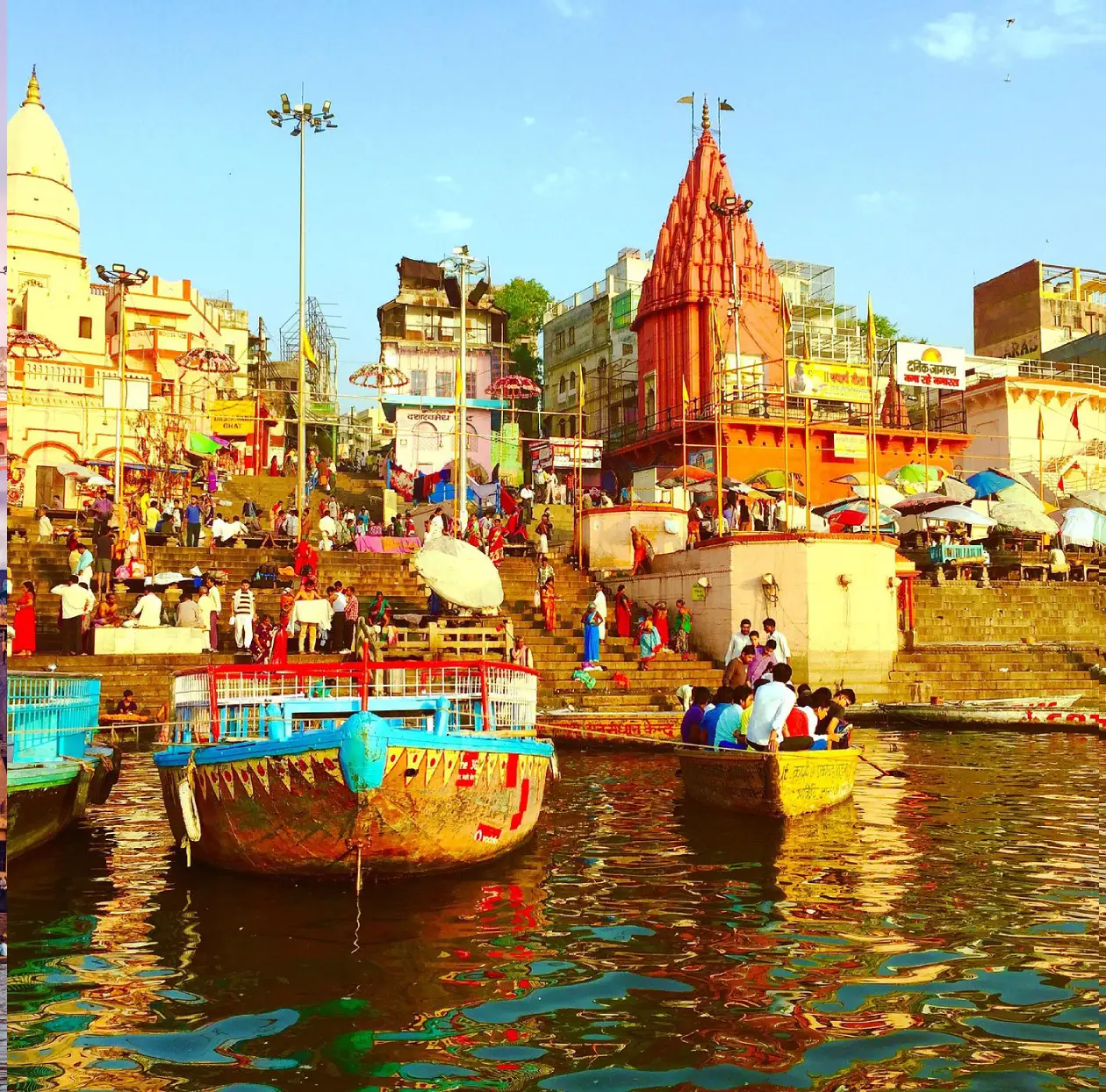
Varanasi : The spiritual capital of India, Varanasi is one of the world’s oldest living cities. Set on the sacred Ganges River, it’s a place where spirituality, devotion, and daily life intertwine beautifully. Varanasi is a city in the northern Indian state of Uttar Pradesh dating to the 11th century B.C. Regarded as the spiritual capital of India, the city draws Hindu pilgrims who bathe in the Ganges River’s sacred waters and perform funeral rites. Along the city's winding streets.
Begin with a sunrise boat ride on the Ganges River, witnessing morning prayers and rituals on the ghats. and explore local bazaars known for Banarasi silk sarees.
Sarnath [ 15 km ] : Sarnath is a sacred Buddhist site where Gautama Buddha gave his first sermon after attaining enlightenment. It is an important place for pilgrims and is known for the famous Dhamekh Stupa. Sarnath reflects peace, spirituality, and rich history back to Varanasi.
Evening : Attend the mesmerizing | Ganga Aarti at Dashashwamedh Ghat — a spiritual experience filled with chants, bells, and oil lamps.
What to Expect : A soul-stirring day of devotion, faith, and timeless beauty.
Overnight : Varanasi.
After breakfast, transfer to the international airport or railway station of Delhi. On arrival, you will be assisted with your onward travel or departure.
What to Expect : Peaceful farewell from India’s spiritual heartland.
We take care of every detail you can travel with confidence ease.
Copyright © Go India Trip, All Rights Reserved.
Term & Condition , Privacy Policy